Content
When a utility engineer writes a metering tender, two nameplate lines drive the entire business case: the accuracy class and the communication interface. Everything in the smart meter vs analog meter debate reduces to those two lines.
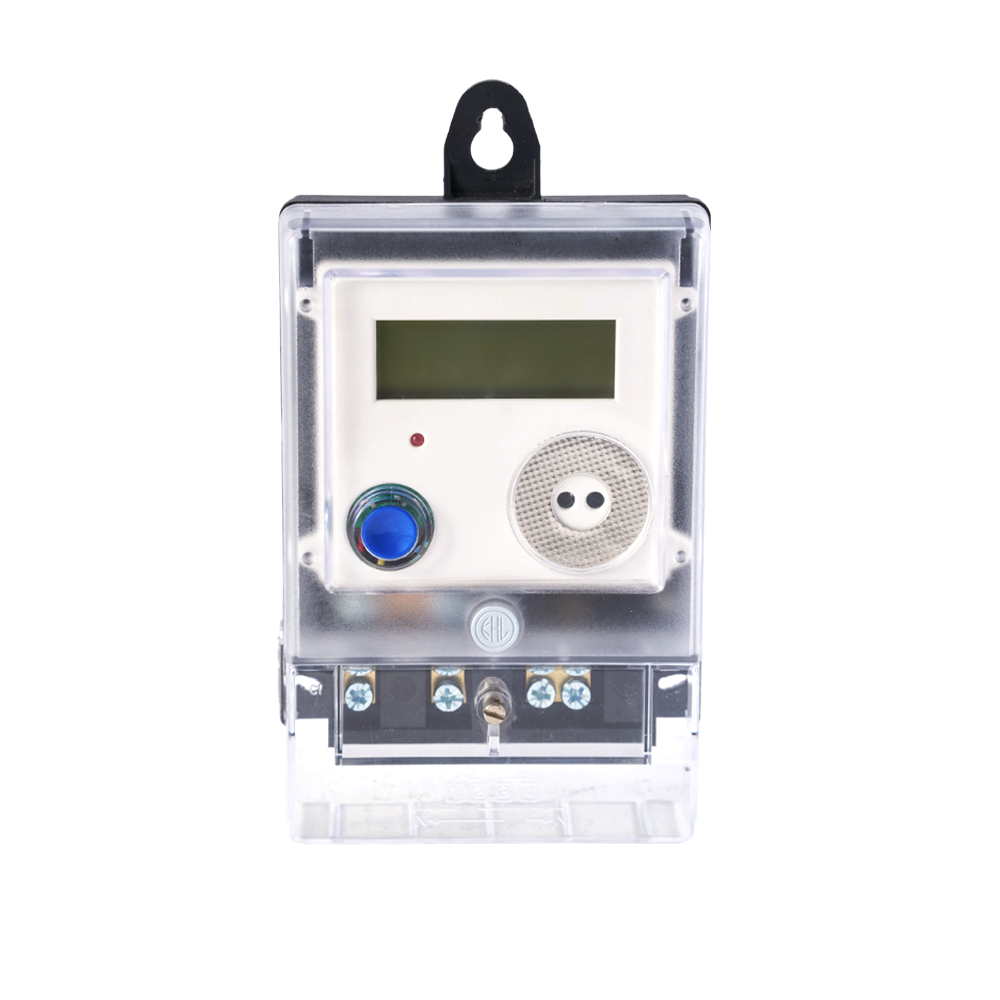
The comparison is not about looks. An analog meter is an electromechanical counter: an induction disc spins, gears advance a mechanical register, and the number waits on the wall until someone walks up and writes it down. A smart meter is an electronic instrument that samples voltage and current continuously, computes energy in firmware, timestamps every reading, and sends the result to the utility over a data network. This article breaks the difference into the two dimensions that actually move cost and revenue: measurement accuracy and data transmission.
The core difference is structural, not cosmetic: an analog meter can only accumulate and display a reading locally, while a smart meter measures digitally, stores granular data and communicates. Accuracy behavior, tamper visibility and remote management all flow from that single distinction.
Definition
A smart meter is an electronic metering device that measures energy consumption digitally and transmits readings, load profiles and event data to the utility over a communication channel; an analog meter is an electromechanical device that only accumulates and locally displays a cumulative kilowatt-hour figure.
In practical terms, three capabilities separate the two technologies:
| Attribute | Analog (electromechanical) | Smart (electronic) |
| Measuring element | Induction disc with mechanical register | Electronic sampling via shunt or current transformer |
| Typical accuracy class | Class 2.0 (IEC 62053-21) | Class 1.0 or Class 0.5S (IEC 62053-21 and 62053-22) |
| Error behavior over life | Drifts as bearings and magnets wear | Stable within class; self-diagnostics flag faults |
| Data output | Cumulative kWh only | kWh, time-of-use, load profile, voltage, tamper events |
| Data transmission | None; manual reading required | PLC, RF or cellular to a concentrator and head-end system |
| Remote management | Not possible | Remote reading, prepaid top-up, connect and disconnect |
Smart meters are more accurate where billing is decided, because electronic metering routinely holds Class 1.0 or Class 0.5S tolerances, which are half to a quarter of the error a Class 2.0 analog meter is permitted.
Under the IEC 62053-21 standard from the International Electrotechnical Commission, a Class 2.0 meter may deviate by up to 2 percent at reference conditions; IEC 62053-22 defines Class 0.5S and 0.2S for high-precision electronic metering. The nameplate number is only the starting point. Induction meters test worst at low loads, where bearing friction and gear drag dominate, and low load is exactly where overnight residential consumption sits. Analog accuracy is also a snapshot from factory calibration, because decades of mechanical wear push the error curve outward. Electronic meters age differently: their error sources, mainly temperature drift and reference stability, are engineered and tested to stay inside class for the service life of the meter.
A Class 0.5S electronic meter allows one quarter of the error band of a typical Class 2.0 induction meter.
The compounding effect matters more than any single percentage. A fleet that under-registers by just 1.5 percent across 100 million kWh of monthly billed energy quietly writes off 1.5 million kWh every month, before theft and unmetered supply are even counted.
Twice the tolerance: a Class 2.0 analog meter is allowed double the error of a Class 1.0 smart meter at every test point, and four times that of a Class 0.5S device.
An analog meter has no data transmission capability at all, so every reading must travel by foot, by vehicle or through a handheld terminal. A smart meter is designed around its communication path, and that path generates most of the operating savings.
A typical smart metering architecture layers three links. Field meters report to a data concentrator unit (DCU) installed near the distribution transformer, usually over power line carrier (PLC) or a local radio mesh. The DCU backhauls aggregated readings over cellular or Ethernet to a head-end system (HES), which validates, stores and passes data on to billing and prepayment platforms. DLMS/COSEM standardizes the data objects so meters from different production batches interoperate, and the Standard Transfer Specification (STS) secures prepaid credit tokens.
Field note
A meter that measures perfectly but cannot communicate still costs a truck roll every month. The transmission layer, not the register, is where metering operations stop losing money.
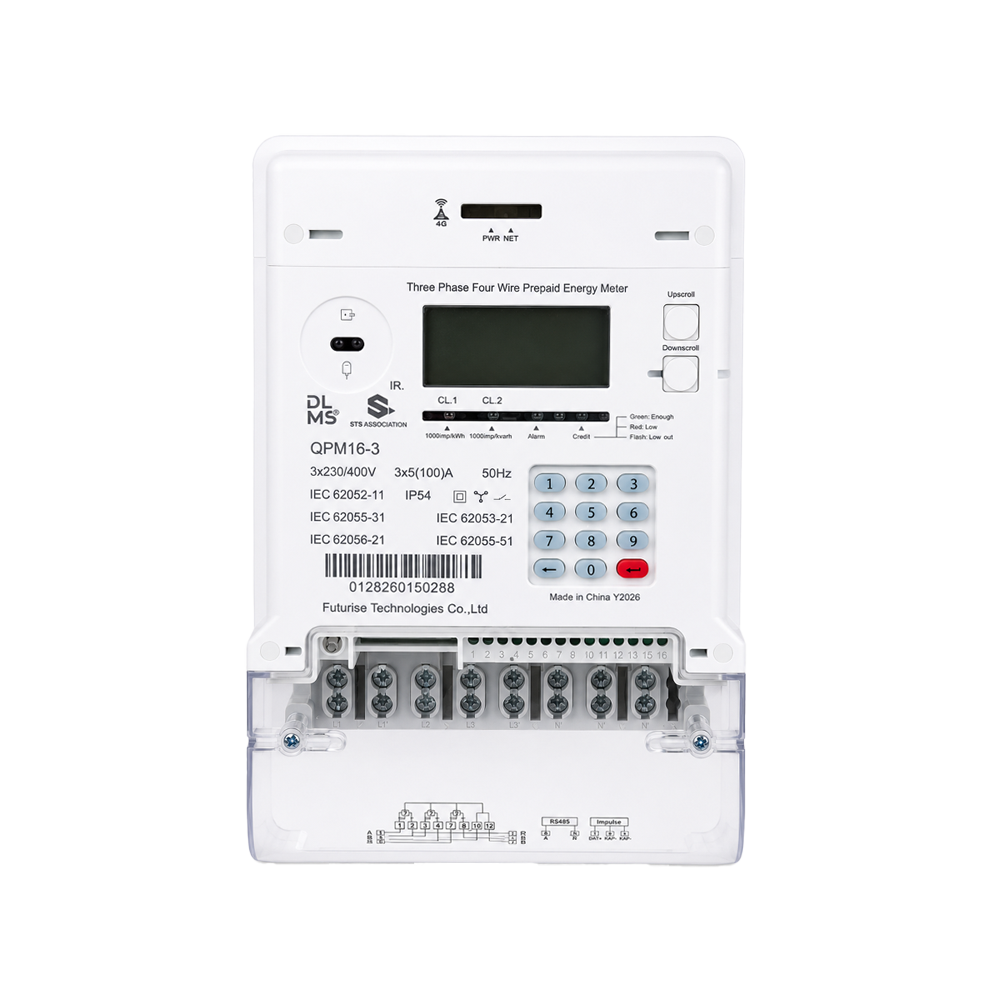
This layered architecture is now standard among global suppliers. Futurise Technologies Co., Ltd., a smart metering and energy solutions provider founded in 2002, pairs its smart, prepaid and din-rail meter families with data concentrator units and an HES platform. The company released its QSM and QPM smart meter series for export markets in 2005, joined the STS Association in 2013 and earned DLMS UA interoperability certification in 2015. More than 50 million of its meters are installed across Africa, South America and the Middle East, a scale that exists because the meters do two jobs at once: they measure within class and they transmit without a human in the loop.
The measurable payoff of a smart meter vs analog meter migration concentrates in three numbers: error tolerance, data resolution and fleet scale.
Accuracy converts directly into recovered revenue. Tighter classes shrink both unintentional drift and deliberate under-registration, while electronic tamper detection reports reverse energy flow, cover opening and magnetic interference that an induction meter absorbs silently. Transmission converts into operating efficiency: remote reads eliminate estimated bills and recurring route costs, interval data turns loss analysis from a monthly guess into a street-level diagnosis, and remote connect and disconnect remove service visits from routine workflows.
Once interval data flows, a utility can:
Analog meters are not obsolete; they are simply limited to jobs where transmitted data adds no value. Selection should follow the deployment scenario, not technology fashion.
Specify a smart meter when
An analog meter remains sensible when
Rule of thumb: if a meter's reading influences money or decisions more than once per billing cycle, its communication port will pay for itself. If it does not, the analog meter's simplicity is still an asset.
Yes. An electronic Class 1.0 meter holds half the permitted error of a Class 2.0 analog meter, and unlike an induction meter it does not drift as bearings wear. At low loads, where analog meters are weakest, the gap widens further.
Through power line carrier, RF mesh or cellular links, usually via a data concentrator unit that aggregates nearby meters and backhauls to a head-end system using DLMS/COSEM. Analog meters have no transmission path; their data is read manually.
They can, and phased rollouts are common. The HES and billing platform handle both: analog meters contribute manually keyed cumulative reads while smart meters add interval data as coverage grows.
Class 1.0 for standard residential and commercial metering, and Class 0.5S for bulk supply points and large industrial customers. Also require IEC compliance, DLMS/COSEM interoperability and, for prepaid markets, STS certification.
The decisive factors are accuracy class and communication path. Analog meters remain dependable counters that stay silent; smart meters pair tighter electronic accuracy with a data channel that turns every reading into an operational asset.
Share:


 English
 Français